Longitudinal Trajectories of 3-Dimensional Eye Shape and Pathological Sequelae in High Myopia.
Chen, Li … Wang
JAMA Ophthalmol·Sep 3, 2026
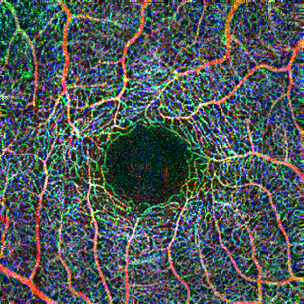
In a 15-year MRI cohort study of highly myopic eyes, five distinct 3D globe remodeling patterns were identified, with focal deformation patterns—independent of axial elongation—strongly associated with MMD progression, posterior staphyloma, and myopic traction maculopathy.
Re: Kiraly et al: Anatomical and functional outcomes after pars plana vitrectomy for giant retinal tear-related detachment: The Manchester GRT Study (Ophthalmol Retina. 2026;10:913-921).
Shukla
Ophthalmol Retina·Sep 1, 2026
Abstract not available — see full article for details.
OCT-Defined Foveal Restoration Is Associated with Visual Recovery after Vitrectomy for Lamellar Macular Hole: A Multicenter Study: LMH Report No. 1.
Fukushima, Akai …
Ophthalmol Retina·Sep 1, 2026
In this multicenter retrospective study of 166 eyes undergoing vitrectomy for lamellar macular hole (LMH), approximately 15% failed to achieve anatomic success—either developing unresolved LMH or postoperative full-thickness macular hole (FTMH)—both of which were associated with significantly worse visual outcomes and the absence of ILM peeling.
Vitrectomy Versus Observation for Lamellar Macular Holes With Epiretinal Proliferation: A Systematic Review and Meta-Analysis.
Sabage, Miranda … Moreira-Neto
Am J Ophthalmol·Sep 1, 2026
In this systematic review and meta-analysis of 610 eyes, vitrectomy for lamellar macular holes with epiretinal proliferation (LHEP) was associated with significant visual improvement (~1.7 lines), while observation yielded no significant visual change and comparable rates of progression to full-thickness macular hole.
MORPHOLOGIC DISTINCTION OF SUPRA-RPE DEPOSITS IN IDIOPATHIC FULL-THICKNESS MACULAR HOLES.
Quarta, Ruggeri … Mastropasqua
Retina·Sep 1, 2026
En face OCT classification of supra-RPE deposits in idiopathic full-thickness macular holes into fine versus granular morphology independently predicts postoperative visual recovery, with granular deposits associated with worse visual acuity and greater outer retinal band disruption at 6 months.
Association of Atopic Dermatitis with Retinal Detachment and Postoperative Proliferative Vitreoretinopathy Risk.
Hong, Lin … Prasad
Ophthalmol Retina·Sep 1, 2026
In a large propensity-matched cohort study of over 274,000 patients, atopic dermatitis (AD) was associated with nearly 5-fold increased risk of retinal detachment repair and 45% increased risk of postoperative proliferative vitreoretinopathy (PVR) compared to controls.
AQUEOUS HUMOR ANGIOTENSIN-CONVERTING ENZYME AND TGF-β1 LEVELS IN PROLIFERATIVE VITREORETINOPATHY: A Prospective Clinical Study.
Koçak, Özdemir … Avcı
Retina·Sep 1, 2026
In this prospective study of 88 patients, aqueous humor TGF-β1 was significantly elevated in eyes with PVR secondary to RRD and demonstrated strong discriminative performance (AUC 0.92) for identifying PVR, while aqueous ACE elevation appeared to reflect general RRD-related intraocular changes rather than PVR specifically.
Anatomic and Functional Outcomes after Pars Plana Vitrectomy for Giant Retinal Tear-Related Retinal Detachment: The Manchester Giant Retinal Tear Study.
Kiraly, Ivanova … Moussa
Ophthalmol Retina·Sep 1, 2026
Primary PPV for giant retinal tear-related retinal detachment achieved high single-surgery anatomic success (88.2%) and final anatomic success (96.3%), with gas tamponade showing a trend toward better visual outcomes compared to silicone oil, particularly in macula-on eyes.
Highly Myopic Macular Hole Surgery by the Internal Limiting Membrane Flap with No Gas Tamponade Technique: A Prospective Interventional Case Series.
Szeto, Yu … Tsang
Ophthalmol Retina·Sep 1, 2026
A prospective case series of 20 highly myopic eyes demonstrated 100% macular hole closure at 12 weeks using an ILM flap technique without gas tamponade, with median closure achieved at 1 week and significant visual acuity improvement sustained through 24 weeks.
Artificial Intelligence-Based Prognostic Models for Postoperative Outcomes in Vitreoretinal Surgery: A Systematic Review and Meta-Analysis.
Al-Ani, Connors … Munro
Ophthalmol Retina·Sep 1, 2026
This systematic review and meta-analysis of 26 studies found that AI-based models demonstrate strong predictive performance for vitreoretinal surgical outcomes, with pooled sensitivity of 0.89 and specificity of 0.87, though evidence quality remains low and external validation is lacking.
TO DRAIN OR NOT TO DRAIN? THE MANCHESTER BUCKLE STUDY.
Kiraly, Lippera … Jasani
Retina·Sep 1, 2026
In this retrospective study of 609 primary scleral buckles, external subretinal fluid drainage did not improve single-surgery anatomical success or final visual acuity compared to non-drainage, supporting an individualized approach based on case characteristics and surgeon preference.
PREOPERATIVE PROLIFERATIVE VITREORETINOPATHY IN OPEN-GLOBE INJURIES: Chronological Observations Based on the Inner Wound Tract Aspect.
Wang, Feng … Ma
Retina·Sep 1, 2026
In Zone III open-globe injuries, PVR proliferative activity begins within 7–14 days and is associated with irreversible retinal disorganization beyond two weeks, suggesting a narrow window for early vitrectomy to preserve retinal integrity.
ONE-YEAR OUTCOME OF RETINAL DISPLACEMENT AFTER INTERNAL LIMITING MEMBRANE PEELING FOR MACULAR HOLE.
Takeyama, Imamura … Ishida
Retina·Sep 1, 2026
Following macular hole surgery with ILM peeling, the surrounding retina continues to shift asymmetrically toward the optic disc for at least one year, with temporal retinal displacement correlating inversely with basal macular hole diameter.
Biomaterials in Retinal Surgery: Engineering the Future.
Dindar, Shoichet … Devenyi
Am J Ophthalmol·Aug 30, 2026
This expert narrative review synthesizes advances across five biomaterial domains in retinal surgery—vitreous substitutes, retinal prostheses, RPE transplant scaffolds, sustained-release drug delivery, and gene therapy vectors—demonstrating a paradigm shift from disease stabilization toward tissue replacement and vision restoration.
Real-World Applicability of Anti-VEGF Trial Criteria for Diabetic Macular Edema.
Kundu, Goturi … Ness
Am J Ophthalmol·Sep 4, 2026
Systemic eligibility criteria used in anti-VEGF clinical trials for DME exclude a substantial proportion of real-world patients—up to 59% under stringent criteria—with Black patients and other racial minorities disproportionately affected.
INFLAMMATORY MEDIATORS IN DIABETIC MACULAR EDEMA: A Prospective, Controlled Study.
Kim, Gangaputra … Sheng
Retina·Sep 1, 2026
In a prospective study of 164 type II diabetic patients, aqueous levels of IL-6, IL-8, IL-10, FLT-3L, and FGF-2 were significantly elevated in eyes with diabetic macular edema (DME), identifying these cytokines as key inflammatory mediators of the disease.
INFLAMMATORY AND IMAGING BIOMARKERS IN TREATMENT-NAÏVE DIABETIC MACULAR EDEMA: Comparison with Irvine-Gass and Cataract Controls.
Demirel, Yanık … Özmert
Retina·Sep 1, 2026
In treatment-naïve DME eyes, aqueous flare did not differ from cataract controls, suggesting a milder anterior segment inflammatory profile compared to Irvine-Gass syndrome, while hyperreflective foci and ellipsoid zone disruption were more prevalent in DME and may reflect underlying inflammatory signaling.
DEXAMETHASONE IMPLANT AND AFLIBERCEPT COMBINATION THERAPY VERSUS AFLIBERCEPT MONOTHERAPY FOR DIABETIC MACULAR EDEMA: A Prospective, Comparative Trial (COED Trial).
Kim, Orndahl … Abbey
Retina·Sep 1, 2026
In this prospective RCT (COED Trial), combined dexamethasone implant plus aflibercept achieved faster DME resolution by a median of 12 weeks compared to aflibercept monotherapy, but demonstrated similar anatomic and visual outcomes at 48 weeks with a trend toward fewer injections in the combination group.
EFFICACY OF COMBINED DEXAMETHASONE IMPLANT AND NAVIGATED SUBTHRESHOLD MICROPULSE YELLOW LASER IN DIABETIC MACULAR EDEMA.
Oliverio, Meduri … Aragona
Retina·Sep 1, 2026
In a prospective randomized trial of 80 eyes with center-involving diabetic macular edema, combining intravitreal dexamethasone implant (Ozurdex) with navigated subthreshold micropulse yellow laser (577 nm) applied 4 weeks later yielded superior visual acuity gains, greater central subfield thickness reduction, and longer retreatment-free survival compared to dexamethasone monotherapy over 12 months.
Treatment of foveal-involving tractional retinal detachments from proliferative diabetic retinopathy with intravitreal anti-VEGF therapy.
Mehta & Hubbard
Retina·Aug 31, 2026
In this retrospective case series, serial intravitreal anti-VEGF therapy achieved foveal reattachment in 75% of eyes with fovea-off tractional retinal detachment from proliferative diabetic retinopathy, with mean visual acuity improving from 20/1233 at presentation to 20/204 at last follow-up among reattached eyes.
Longitudinal Changes in Inner Retinal Layers in Treatment-Naïve Neovascular AMD During Intravitreal Anti-VEGF Therapy.
Kardo, Garweg … Garweg
Ophthalmol Retina·Sep 4, 2026
In treatment-naïve neovascular AMD eyes receiving anti-VEGF therapy, RNFL thickness decreased during the loading phase (likely reflecting resolution of edema) but stabilized thereafter, while GC-IPL thickness progressively declined regardless of treatment—mirroring the pattern seen in untreated fellow eyes with dry AMD.
Re: Holz et al.: Adherence to intravitreal aflibercept in neovascular age-related macular degeneration: 24-month results from the ANDROMEDA Study (Ophthalmol. Retina. 2026;10:241-249).
Manikya, Vadhithala … Nainwal
Ophthalmol Retina·Sep 1, 2026
Abstract not available — see full article for details.
Predictors of 1-Year Visual Outcome in Central-Involving Submacular Hemorrhage Secondary to Neovascular AMD.
Gilead, Chong … Cheung
Am J Ophthalmol·Sep 1, 2026
In this prospective cohort of 75 Asian eyes with fovea-involving submacular hemorrhage due to neovascular AMD or PCV, one-third achieved ≥20/40 vision at 12 months, with younger age, better baseline BCVA, thicker subfoveal choroid, and smaller hemorrhage size independently predicting visual outcome.
Predictors of Good Visual Recovery in Patients With Spontaneously Resolved Acute CSCR - MICRoN Report Number Thirteen.
Hasan, Sahoo …
Am J Ophthalmol·Sep 1, 2026
In a multicenter cohort of 195 eyes with spontaneously resolved acute CSCR, only 55% achieved ≥20/20 VA, with older age, poorer baseline VA, absent serous PED, and bilaterality independently predicting failure to reach 20/20 vision.
Cardiovascular Disease and Age-Related Macular Degeneration.
Smith & Rosenfeld
Am J Ophthalmol·Sep 1, 2026
While a general association between cardiovascular disease (CVD) and AMD has not been established, specific high-risk cardiovascular diseases (HRCVDs) that compromise choroidal perfusion are strongly linked to subretinal drusenoid deposits (SDDs), suggesting a distinct vasculopathic pathway in AMD pathogenesis.
Macular Neovascularization in Neovascular Age-Related Macular Degeneration: A Systematic Review of OCT Angiography-based Assessments and Challenges in Standardization.
Novarese, Vyas … Borrelli
Ophthalmol Retina·Sep 1, 2026
This systematic review of 155 studies (9,025 patients) found that while OCTA provides detailed noninvasive visualization of macular neovascularization in nAMD, significant methodological heterogeneity in devices, scan protocols, segmentation strategies, and artifact correction substantially limits cross-study comparability and reproducibility.
Nonsteroidal Anti-inflammatory Drug Use and the Risk of Age-Related Macular Degeneration: Insights from a Multicenter Cohort Analysis.
Hsu, Kuo … Wei
Ophthalmology·Sep 1, 2026
In a large propensity score-matched cohort of over 1.2 million patients, NSAID use was associated with a significantly reduced risk of AMD development (HR 0.58), with protective effects observed for both nonexudative and exudative subtypes across follow-up periods up to 5 years.
IMPACT OF PHACOEMULSIFICATION ON NEOVASCULAR AGE-RELATED MACULAR DEGENERATION ACTIVITY: Predictive Role of Choroidal Vascularity and MNV Subtypes.
Cha, Youn … Choi
Retina·Sep 1, 2026
In patients with neovascular AMD on anti-VEGF therapy, phacoemulsification increased treatment needs in 45% of eyes, with higher preoperative choroidal vascularity index (CVI) independently predicting this risk and PCV subtype showing the greatest vulnerability.
Systemic Vascular Risks After Retinal Artery and Vein Occlusions: A Large-Scale Real-World Analysis.
Wang, Zhu … Hadziahmetovic
Retina·Sep 4, 2026
In a large-scale real-world analysis of over 129 million patients, retinal artery occlusions (RAO) carried significantly higher risks of ischemic stroke, ischemic heart disease, myocardial infarction, atrial fibrillation, and mortality compared to retinal vein occlusions (RVO), with CRAO posing the greatest overall systemic vascular risk.
THE DEEP CAPILLARY PLEXUS OF THE EYE MIRRORS THE HEART IN TERMS OF MICROVASCULAR DYSFUNCTION: An OCTA Study.
Akkul, Aslanci … Kapsiz
Retina·Sep 1, 2026
In this OCTA study of 92 patients with coronary microvascular dysfunction (CMD), the deep capillary plexus (DCP) emerged as the sole independent predictor of CMD (OR 7.54), suggesting retinal microvasculature—particularly the DCP—may serve as a non-invasive biomarker for systemic microvascular disease.
Effects of Time from Diagnosis to Treatment and Baseline Vision on Retinal Vein Occlusion Outcomes in Aflibercept 2 mg Phase III Trials.
Sharma, Dhoot … Boyer
Ophthalmol Retina·Sep 1, 2026
In patients with macular edema from retinal vein occlusion, earlier initiation of intravitreal aflibercept 2 mg yielded significantly greater visual acuity gains, while poor baseline BCVA predicted larger letter gains but lower final visual acuity regardless of treatment timing.
RETINAL ISCHEMIC PERIVASCULAR LESIONS IN THE FELLOW EYES OF PATIENTS WITH CENTRAL RETINAL ARTERY OCCLUSION.
Karaca Adıyeke & Kutlu Uzakgider
Retina·Sep 1, 2026
Fellow eyes of patients with unilateral CRAO demonstrate a significantly higher prevalence and burden of retinal ischemic perivascular lesions (RIPLs) on SD-OCT compared to healthy controls (74.4% vs. 24.6%), suggesting subclinical microstructural ischemic changes are detectable even in clinically unaffected eyes.
SSGJ-601 versus Ranibizumab for Macular Edema Secondary to Branch Retinal Vein Occlusion: 52-Week Results from a Phase 3 Study.
Wang, Li … Li
Ophthalmol Retina·Aug 31, 2026
The biosimilar SSGJ-601 demonstrated non-inferiority to ranibizumab in improving BCVA at 24 weeks in patients with BRVO-related macular edema, with comparable safety and immunogenicity profiles over 52 weeks.
USH2A-Associated Retinitis Pigmentosa in Koreans: Molecular Genetics and Clinical Characteristics.
Hwang, Jeon … Kim
Am J Ophthalmol·Sep 3, 2026
This retrospective study of 182 Korean patients with USH2A-associated retinitis pigmentosa identified a distinct East Asian variant spectrum dominated by c.2802T>G (p.Cys934Trp) in exon 13, with Usher syndrome phenotype and higher truncating variant burden correlating with worse visual outcomes over time.
Safety and Effects of Gildeuretinol Acetate on Retinal Atrophic Lesions in Stargardt Disease: The TEASE-1 Randomized Clinical Trial.
Kay, Saad …
JAMA Ophthalmol·Sep 3, 2026
In the TEASE-1 randomized clinical trial, oral gildeuretinol acetate demonstrated a statistically significant 21.6% relative reduction in retinal atrophic lesion growth rate in Stargardt disease over 24 months, with a favorable safety profile, though clinical significance of this endpoint remains to be established.
Centripetal Retinal Degeneration Follows an Exponential Decay and May Be Reversed Following Gene Therapy.
Abdalla Elsayed, Josan … Maclaren
Am J Ophthalmol·Sep 1, 2026
In 58 patients with rod-cone dystrophies, the hyperautofluorescent ring on fundus autofluorescence follows a highly predictable logarithmic (exponential decay) progression pattern, and RPGR gene therapy with Cotoretigene Toliparvovec was associated with measurable reversal of this ring alongside improvements in retinal sensitivity.
CILIARY NEUROTROPHIC FACTOR THERAPY FOR MACULAR TELANGIECTASIA TYPE 2: A Systematic Review.
Sriranganathan, Rajesh … Muni
Retina·Sep 1, 2026
This systematic review of 5 studies (498 eyes, 422 patients) found that ciliary neurotrophic factor (CNTF) therapy slows retinal degeneration and may preserve visual function in macular telangiectasia type 2 (MacTel), though functional benefits remain variable and long-term efficacy requires further study.
Voretigene Neparvovec (Luxturna) for Biallelic RPE65-Associated Retinal Dystrophy: Systematic Review.
Butt, Zaman … Kohly
Am J Ophthalmol·Aug 31, 2026
This systematic review of 28 studies (376 patients, 673 treated eyes) found that voretigene neparvovec-rzyl consistently improves light sensitivity and visual field—particularly in pediatric patients treated before advanced degeneration—while BCVA gains are variable and modest, and perifoveal chorioretinal atrophy develops in approximately 75% of treated eyes.
Anti-VEGF versus Laser Photocoagulation Surgery for Primary Treatment of Retinopathy of Prematurity: Neurodevelopmental Outcomes: A Report by the American Academy of Ophthalmology.
Prakalapakorn, Trivedi … Chang
Ophthalmology·Sep 1, 2026
This AAO systematic review of 26 studies found no significant difference in neurodevelopmental outcomes between intravitreal anti-VEGF and laser photocoagulation as primary treatment for ROP, though evidence is limited by lack of adequately powered trials.
Asymmetric Peripheral Retinal Vascular Extension in Anti-Vascular Endothelial Growth Factor-Treated Type 1 Retinopathy of Prematurity: Disparity Between Nasal and Temporal Hemispheres.
Shah, Chandler … Hartnett
Am J Ophthalmol·Sep 1, 2026
In anti-VEGF-treated Type 1 ROP eyes, retinal vascular extension was significantly greater in both nasal and temporal hemispheres compared to controls, but treated eyes exhibited notable nasal-temporal asymmetry, suggesting uneven anti-VEGF drug distribution within the infant vitreous.
Evidence and Consensus Based Imaging Guidelines in Ocular Toxoplasmosis. Multimodal imaging in Uveitis (MUV) Taskforce Report 14.
Trinco, Invernizzi …
Ophthalmol Retina·Sep 2, 2026
The MUV Taskforce developed consensus-based multimodal imaging guidelines for ocular toxoplasmosis, concluding that typical active OT remains a clinical diagnosis requiring only color fundus photography, while OCT and FAF are valuable adjuncts for disease monitoring and atypical presentations.
Subclinical Peripheral Vascular Leakage in Demyelinating Disease-Associated Uveitis.
Levant, Ray & Venkat
Am J Ophthalmol·Sep 1, 2026
In demyelinating disease-associated uveitis, 68.8% of clinically inactive eyes demonstrated ongoing peripheral vascular leakage on ultrawidefield fluorescein angiography (UWF-FA), highlighting a significant discordance between standard clinical examination and angiographic disease activity.
Immune Checkpoint Inhibitor-Associated Uveitis: Insights From Comparative Analyses Across Malignancies and Drug Classes.
Bellanda, Schulgit … Sharma
Am J Ophthalmol·Sep 1, 2026
In this large propensity score-matched cohort study, melanoma patients receiving immune checkpoint inhibitors (ICIs) had a 6-fold higher risk of noninfectious uveitis compared to lung cancer patients, with elevated risk persisting even after excluding ipilimumab/nivolumab, suggesting an intrinsic disease-specific component to ICI-associated uveitis.
Optical Coherence Tomography (OCT) Features of Inactive Multifocal Choroiditis With Panuveitis and Punctate Inner Choroidopathy (MFCPU/PIC) Lesions.
Trinco, Ferdeghini … Invernizzi
Am J Ophthalmol·Sep 1, 2026
In inactive MFCPU/PIC lesions, Bruch's membrane disruption (94.7%) and inner nuclear layer herniation into focal choroidal excavation (57.9%) are highly characteristic OCT features that strongly differentiate these lesions from atrophic scars caused by infectious and inflammatory mimickers.
Morphologic Staging of Photoreceptor Damage as a Predictor of Visual Recovery After PDT in Chronic Central Serous Chorioretinopathy.
Berni, Scalabrin … Borrelli
Am J Ophthalmol·Sep 1, 2026
In chronic central serous chorioretinopathy treated with verteporfin PDT, symptom duration predicts anatomical resolution of subretinal fluid, while baseline photoreceptor integrity—graded via a novel 6-stage SD-OCT classification—is the primary determinant of visual acuity recovery after treatment.
Imaging Characteristics and Longitudinal Follow-Up of Inner Choroidal Fibrosis in Chronic Central Serous Chorioretinopathy.
Hansraj, Chhablani … Sahoo
Am J Ophthalmol·Sep 1, 2026
Inner choroidal fibrosis (ICF) in chronic central serous chorioretinopathy (CSC) is associated with persistent subretinal fluid, poor treatment response, and progressive enlargement over time, with Type 2 ICF (well-demarcated accumulations) carrying worse visual outcomes than Type 1.
Efficacy of En Face Optical Coherence Tomography Minimum Intensity Projection in Evaluating Inflammatory Retinal Vascular Changes.
Mizuno, Srivastava … Sharma
Am J Ophthalmol·Sep 1, 2026
En face OCT using minimum intensity projection (MIP) demonstrated high sensitivity (0.82) for detecting fluorescein angiography-defined inflammatory retinal vascular changes in uveitis, substantially outperforming retinal thickness maps and offering a promising noninvasive adjunct for uveitic disease monitoring.
En Face Optical Coherence Tomography Imaging as a Structural Surrogate for Posterior Pole Inflammatory Retinal Vascular Activity.
Mizuno, Srivastava … Sharma
Am J Ophthalmol·Sep 1, 2026
Structural en face OCT using a customized outer plexiform layer-outer nuclear layer slab demonstrated high sensitivity (0.94) but limited specificity (0.38) for detecting FA-defined inflammatory retinal vascular activity in uveitis, supporting its use as a noninvasive adjunctive screening tool rather than a standalone diagnostic.
Deconstructing White Dot Syndromes-Multimodal Imaging in Uveitis (MUV) Taskforce: Report 11.
Invernizzi, Agarwal …
Am J Ophthalmol·Sep 1, 2026
Multimodal imaging reveals fundamentally distinct anatomic and immunopathogenic mechanisms among the six classically grouped 'white dot syndromes,' challenging the validity of this umbrella terminology and supporting a shift toward disease-specific classification.
PERIVASCULAR MULTIFOCAL CHOROIDITIS WITH PANUVEITIS: Clinical and Multimodal Imaging Features.
Feo, Quarta … Tsui
Retina·Sep 1, 2026
This retrospective case series characterizes a distinct perivascular phenotype of multifocal choroiditis with panuveitis (MCP), demonstrating reproducible lesion distribution along retinal vessels with generally preserved visual acuity and a 21% rate of choroidal neovascularization responsive to anti-VEGF therapy.
COMPARISON BETWEEN THIN AND THICK CHOROID EYES IN CENTRAL SEROUS CHORIORETINOPATHY.
Yadav, Hasan …
Retina·Sep 1, 2026
Thin-choroid CSC (subfoveal choroidal thickness ≤250 µm) represents a distinct clinical phenotype affecting older, predominantly female patients, with a significantly higher rate of choroidal neovascularization compared to classic thick-choroid CSC, though age may be the primary driver of CNV risk.
PLAQUE RADIOTHERAPY FOR POSTERIOR UVEAL MELANOMA IN 4,000 EYES: Risk Factors for ≥15-Letter Visual Acuity Loss in the Pre-Anti-VEGF Era.
Shields, Medina … Shields
Retina·Sep 1, 2026
In a landmark series of 4,000 eyes with posterior uveal melanoma treated with plaque radiotherapy, significant visual acuity loss (≥15 letters) occurred in 30% at 1 year and 82% at 10 years, with greater tumor thickness, proximity to the foveola, higher radiation dose to the foveola and lens, and diabetes mellitus as key predictive risk factors.
Endophthalmitis, surgical complications, drug safety, adverse events
Re: Marmor et al.: Special AAO Report: Recommendations on Screening for Hydroxychloroquine Retinopathy (2025 Revision) (Ophthalmology 2026;133:439-450).
Rudnisky
Ophthalmology·Sep 4, 2026
Abstract not available — see full article for details.
Reply to Comment on: Imaging Biomarkers for Early Differentiation of Candida and Aspergillus Endogenous Fungal Endophthalmitis: Multicenter Optical Coherence Tomography-Based Analysis.
Agarwal, Menia & Invernizzi
Am J Ophthalmol·Sep 1, 2026
Abstract not available — see full article for details.
Comment on: Imaging Biomarkers for Early Differentiation of Candida and Aspergillus Endogenous Fungal Endophthalmitis: Multicenter Optical Coherence Tomography-Based Analysis.
Yuan
Am J Ophthalmol·Sep 1, 2026
Abstract not available — see full article for details.
Risk of Retinal Detachment After Intravitreal Injection of Anti-VEGF: A Systematic Review and Meta-Analysis.
Mikhail, Tao … Popovic
Am J Ophthalmol·Sep 1, 2026
This systematic review and meta-analysis of over 787,000 intravitreal anti-VEGF injections found a pooled rhegmatogenous retinal detachment risk of 0.012% per injection (1 in 8,675 injections) and 0.08% per eye (1 in 1,250 eyes), providing clinicians with quantified risk estimates for informed consent discussions.
ENDOPHTHALMITIS ASSOCIATED WITH INTRAVITREAL INJECTION: Rates, Culture Results, and Visual Acuity Outcomes.
Rohowetz, Snow …
Retina·Sep 1, 2026
In a large 5-year retrospective series of 138,216 intravitreal injections at Bascom Palmer, the cumulative endophthalmitis incidence was 0.0072%, with no significant difference in rates between agents and a trend toward zero cases in 2025.
Comparative Endophthalmitis Rates in Adult and Pediatric Patients across Various Ophthalmic Procedures: An IRIS® Registry Analysis.
Chaaya, Goldberg …
Ophthalmology·Sep 1, 2026
In this large IRIS Registry analysis of over 17 million ophthalmic procedures, endophthalmitis rates varied significantly by procedure type, with open-globe repair carrying the highest risk in both adults (0.94%) and pediatrics (0.87%), and pediatric patients facing a significantly higher endophthalmitis risk after cataract surgery compared to adults.
ENDOPHTHALMITIS INCIDENCE AFTER VITRECTOMY: A Systematic Review and Meta-Analysis of Risk Factors and Prevention Strategy.
McGrath, Mulcahy … Connell
Retina·Sep 1, 2026
This systematic review and meta-analysis of nearly 2 million vitrectomies found an overall postvitrectomy endophthalmitis incidence of 0.14%, with nonfluid intraocular tamponade significantly reducing infection risk, while subconjunctival antibiotics, small-gauge instrumentation, and combined phacovitrectomy did not significantly alter endophthalmitis rates.
Adjunct 0.025% Povidone-Iodine Irrigation at Time of Vitrectomy for Management of Infectious Endophthalmitis: A Multicenter Single-Intervention Study.
Yuan, Pally … Adam
Retina·Aug 31, 2026
Adjunctive 0.025% povidone-iodine irrigation during pars plana vitrectomy for infectious endophthalmitis was associated with significantly better visual outcomes at 3 and 6 months compared to standard irrigation, without observed ocular toxicity.