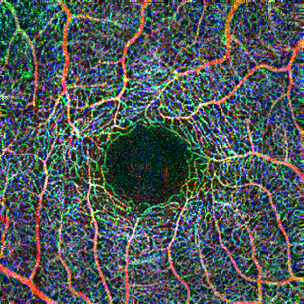
Risks of Retinal Vascular Occlusions with the Systemic Use of Tyrosine Kinase Inhibitors.
Jeong et al.
Ophthalmol Retina·Mar 4, 2026
Anti-VEGF tyrosine kinase inhibitors increase the risk of central retinal vein occlusion within three years of treatment initiation, while non-anti-VEGF TKIs appear to have a more favorable retinal vascular safety profile.
Associations Between Systemic Tyrosine Kinase Inhibitors and Development of Age-Related Macular Degeneration in Patients with Cancer.
Wu et al.
Ophthalmol Retina·Mar 4, 2026
This retrospective cohort study of cancer patients ≥50 years found no consistent association between systemic tyrosine kinase inhibitor (TKI) therapy and reduced risk of age-related macular degeneration development, contradicting hypotheses about protective effects.
Epiretinal Proliferation Embedding Surgery Combined with Temporal Inverted ILM Flap Technique for Lamellar Macular Holes.
Avcı et al.
Retina·Mar 3, 2026
Combination of epiretinal proliferation embedding with temporal inverted ILM flap technique achieved 100% anatomical closure and significant visual improvement in 17 lamellar macular hole patients, with better outcomes in patients treated before severe visual loss.
THE IMPACT OF POSTERIOR STAPHYLOMA ON CLINICAL OUTCOMES OF HIGH MYOPIC MACULAR HOLE: A Retrospective Cohort Study.
Zheng et al.
Retina·Mar 1, 2026
In high myopic macular holes, inverted ILM flap technique achieved superior closure rates compared to ILM peeling across all posterior staphyloma types and grades, with narrow macular staphyloma showing better vessel density outcomes.
Autosomal Recessive Bestrophinopathy-Phenotypic Variability, Natural History, and Genotype-Phenotype Correlations.
Bianco et al.
Am J Ophthalmol·Mar 1, 2026
Autosomal recessive bestrophinopathy (ARB) shows wide phenotypic variability from isolated macular lesions to panretinal degeneration, with primary angle closure being the primary risk factor for severe visual impairment rather than fundus severity.
Aurora Kinases in Ocular Malignancies: Functional Significance and Potential Implications.
Lenka et al.
Ocul Oncol Pathol·Mar 1, 2026
Aurora kinases A and B are crucial regulators of tumor progression in retinoblastoma and uveal melanoma, representing potential novel therapeutic targets for these ocular malignancies.
Impact of Phacoemulsification on Vitreomacular Traction Release and Complications.
Bala et al.
Am J Ophthalmol·Mar 1, 2026
Phacoemulsification does not increase the rate or speed of vitreomacular traction release, with intrinsic patient and anatomical factors being more important determinants of VMT outcomes.
A Randomized-Controlled Trial of the Efficacy, Safety and Tolerability of Intravitreal Brolucizumab in Patients With Chronic Central Serous Chorioretinopathy With Persistent Fluid in the Absence of Choroidal Neovascular Membrane-BRICS Trial Report II.
Ramamurthy et al.
Am J Ophthalmol·Mar 1, 2026
Intravitreal brolucizumab demonstrated significant efficacy in treating chronic central serous chorioretinopathy without CNVM, achieving complete fluid resolution in 59% of eyes at 1 month compared to 12.5% in controls.
Subretinal Fluid Duration and Clinical Outcomes in Central Serous Chorioretinopathy: An Analysis of Time-to-Photodynamic Therapy.
Funatsu et al.
Am J Ophthalmol·Mar 1, 2026
In CSC patients awaiting PDT, prolonged subretinal fluid exposure causes progressive outer nuclear layer thinning but does not significantly impact 12-month visual or anatomical outcomes.
Analysis of Fellow Eye Posterior Vitreous Detachment and Complications Using a Large Database of Retina Specialists.
Brown et al.
Ophthalmol Retina·Mar 1, 2026
In a large retrospective study of 22,525 patients, 21.2% developed fellow eye PVD after first-eye PVD, with median time to occurrence of 37 months and 33.2% experiencing complications in the fellow eye.
Macular Buckle, Vitrectomy, or Combined Approach for the Management of Macular Hole Retinal Detachment: A Systematic Review and Network Meta-Analysis.
Ge et al.
Ophthalmol Retina·Mar 1, 2026
This systematic review and network meta-analysis of 308 eyes found that macular buckle (96.2%) and combined approaches (96.9%) achieved significantly higher retinal reattachment rates than vitrectomy alone (66.9%) for macular hole retinal detachment management.
Association of Patient Age with Response to Anti-Vascular Endothelial Growth Factor Agents for Treatment of Diabetic Macular Edema.
Liu et al.
Retina·Mar 1, 2026
Older patients with diabetic macular edema demonstrate significantly reduced visual acuity improvement and higher rates of weak treatment response to anti-VEGF therapy over 2 years compared to younger patients.
CORRELATION OF RETINAL IMAGING UTILIZATION WITH ANTI-VASCULAR ENDOTHELIAL GROWTH FACTOR AND PANRETINAL PHOTOCOAGULATION USAGE FROM 2013 TO 2021.
Sheth et al.
Retina·Mar 1, 2026
Analysis of Medicare data from 2013-2021 shows OCT utilization increased while fluorescein angiography declined, correlating with rising anti-VEGF injection rates and decreasing PRP usage.
OUTER RETINAL LAYER DETERIORATION PATTERNS IN EYES WITH DIABETIC SEROUS MACULAR DETACHMENT.
Kirik et al.
Retina·Mar 1, 2026
This study identified five distinct outer retinal layer deterioration patterns in diabetic serous macular detachment, with WEDGE pattern showing the best visual outcomes and lowest risk of external limiting membrane/ellipsoid zone alterations.
Expanded Field Optical Coherence Tomography Angiography Biomarkers Associated with Future Cardiovascular Disease and Mortality in Patients with Diabetic Retinopathy.
Lu et al.
Retina·Mar 1, 2026
Swept-source OCT angiography biomarkers, including neovascularization vessel density and deep capillary plexus changes, were associated with increased risk of cardiovascular disease and mortality in diabetic patients with retinopathy over a median 44-month follow-up period.
Prevalence and Risk Factors of Diabetic Macular Edema in Type 1 Diabetes: A Systematic Review and Meta-Analysis.
Marques-Couto et al.
Ophthalmol Retina·Mar 1, 2026
This systematic review and meta-analysis found that diabetic macular edema affects 11.1% of patients with type 1 diabetes, with prevalence strongly correlated to diabetes duration and glycemic control.
Long-term Efficacy and Safety of Photobiomodulation in Dry Age-Related Macular Degeneration (LIGHTSITE III: 24-Month Analysis).
Jaffe et al.
Retina·Mar 3, 2026
The LIGHTSITE III trial demonstrated that multiwavelength photobiomodulation therapy significantly improved visual acuity (+6.2 letters at 21 months) and reduced progression to geographic atrophy in patients with dry AMD compared to sham treatment.
Spectrum of Colopathy and Severe Polyposis Associated with Pentosan Polysulfate Sodium Maculopathy: A Retrospective Case Series.
Feo et al.
Am J Ophthalmol·Mar 3, 2026
This retrospective case series of 8 patients with pentosan polysulfate sodium (PPS) maculopathy found that 75% developed severe adenomatous polyposis, with median latency of 10 years after PPS initiation, expanding the known systemic toxicity profile of this medication.
Atrophy Advisor: A Clinical Tool for Dry Macular Degeneration With Geographic Atrophy.
Kerwin et al.
Am J Ophthalmol·Mar 1, 2026
Researchers developed Atrophy Advisor, a clinical decision tool that combines geographic atrophy progression rates with personalized lifespan estimates to guide complement inhibitor treatment decisions in dry AMD patients.
Basal Laminar Deposits and Pseudodrusen: Rethinking Their Role in Age-Related Macular Degeneration Progression.
Fragiotta et al.
Retina·Mar 1, 2026
Basal laminar deposits (BLamD) are consistently found in AMD eyes with pseudodrusen and may serve as indicators of disease severity and rapid progression to atrophy.
Retinal fingerprint pattern in central serous chorioretinopathy.
Burnasheva et al.
Retina·Mar 1, 2026
Retinal fingerprint pattern (RFP) was identified in 18.3% of CSCR eyes and associated with higher subretinal fluid levels and significantly better anatomical outcomes, with 68.2% achieving complete fluid resolution compared to 36.8% without RFP.
DIAGNOSTIC PERFORMANCE OF MACHINE LEARNING TECHNOLOGY USING OPTICAL COHERENCE TOMOGRAPHIC IMAGE IN RETINAL DISEASES PRESENTED WITH SUBRETINAL FLUID.
Khakhai et al.
Retina·Mar 1, 2026
A machine learning model achieved 87.10% accuracy in differentiating central serous chorioretinopathy, polypoidal choroidal vasculopathy, and Vogt-Koyanagi-Harada disease using single-line foveal OCT images combined with infrared photography.
A NOVEL TECHNIQUE FOR SUBRETINAL HEMATOMA MIGRATION: Directing the Lesion Toward Artificial Retinal Detachment.
Goda et al.
Retina·Mar 1, 2026
A novel surgical technique demonstrates that subretinal hematomas can be directed away from the fovea by creating an artificial retinal detachment with tPA injection temporal to the macula, achieving significant reduction in foveal hematoma size.
OPTICAL COHERENCE TOMOGRAPHY AND OPTICAL COHERENCE TOMOGRAPHY ANGIOGRAPHY BIOMARKERS FOR PREDICTING RESPONSE TO ANTI-VASCULAR ENDOTHELIAL GROWTH FACTOR THERAPY IN NEOVASCULAR AGE-RELATED MACULAR DEGENERATION.
Ucak et al.
Retina·Mar 1, 2026
Loop-shaped neovascular morphology on baseline OCT angiography independently predicted poor anatomical response to anti-VEGF therapy in treatment-naïve neovascular AMD patients after three loading doses.
Adherence to Intravitreal Aflibercept in Neovascular Age-Related Macular Degeneration: 24-Month Results from the ANDROMEDA Study.
Holz et al.
Ophthalmol Retina·Mar 1, 2026
The ANDROMEDA study found poor adherence to aflibercept treatment in neovascular AMD patients, with only 40.1% remaining adherent at 24 months, particularly among treatment-naïve patients.
Risk Factors for 15-Letter Visual Acuity Loss from Geographic Atrophy Progression over 1 Year in the Age-Related Eye Disease Study 2.
Vance et al.
Ophthalmol Retina·Mar 1, 2026
This post-hoc analysis of AREDS2 identified age, closer GA proximity to fovea, current smoking, baseline BCVA <20/40, CFH genotype, and faster GA enlargement as independent risk factors for clinically significant 15-letter visual acuity loss within 1 year in eyes with geographic atrophy.
CRVO, BRVO, retinal ischemia, macular edema from RVO
Pilot Study of Choroidal Synphlebia.
Spaide
Retina·Mar 1, 2026
This pilot study describes choroidal synphlebia, a newly identified configuration of confluent choroidal veins ≥750 μm in dimension, found predominantly in central serous chorioretinopathy patients and associated with treatment resistance to photodynamic therapy.
How to Judge Failure: Defining Treatment Resistance to Anti-VEGF Therapy in Exudative Maculopathies-A Systematic Scoping Review.
Broadhead et al.
Ophthalmol Retina·Mar 1, 2026
A systematic scoping review of 88 studies found wide heterogeneity in definitions of anti-VEGF treatment resistance across neovascular AMD, diabetic macular edema, and retinal vein occlusion, with persistent fluid on OCT despite regular injections being the most common criterion.
CHOROIDAL VASCULARITY INDEX, RETINAL VASCULARITY, AND HEMOGLOBIN LEVELS IN PEDIATRIC SICKLE CELL MACULOPATHY.
Chaaya et al.
Retina·Mar 1, 2026
Pediatric patients with sickle cell disease showed significantly reduced choroidal vascularity index (CVI) compared to healthy controls (54% vs 69%), with lower CVI correlating with decreased retinal vessel density and lower hemoglobin levels.
Screening for Retinal Ischemic Perivascular Lesions in Patients Undergoing Cardiovascular Assessment: A Cross-Sectional Study.
Bellanda et al.
Ophthalmol Retina·Mar 1, 2026
In this cross-sectional study of 559 cardiovascular patients, retinal ischemic perivascular lesions (RIPLs) were found in 26.3% of eyes but showed no significant association with major adverse cardiovascular events (MACE), challenging their proposed role as cardiovascular biomarkers.
Natural History of CNGA1-Associated Retinitis Pigmentosa in a Large Chinese Cohort Revealing an Optimal Intervention Window.
Liu et al.
Am J Ophthalmol·Mar 1, 2026
This large Chinese cohort study of 58 CNGA1-RP patients reveals that visual acuity remains stable until age 30.7 years before declining, while visual field loss begins earlier in childhood, suggesting an optimal intervention window between the 3rd and 4th decades of life.
EARLY FINDINGS FROM A NATURAL HISTORY STUDY OF PATIENTS WITH THE PATHOGENIC p.Gly208Asp PRPH2 VARIANT ASSOCIATED WITH RETINAL DYSTROPHY.
AlAshwal et al.
Retina·Mar 1, 2026
A prospective study of 7 patients with the pathogenic p.Gly208Asp PRPH2 variant demonstrated central areolar chorioretinal dystrophy phenotype with measurable progression markers including reduced retinal thickness and increased autofluorescence defects over 1 year follow-up.
MERTK-related retinopathy presents as juvenile rod-cone dystrophy with early macular involvement, typically causing significant visual loss by teenage years and showing asymmetric progression with common optic disc drusen and myopia.
EFFICACY AND VASCULAR REDEVELOPMENT OF ANTI-VASCULAR ENDOTHELIAL GROWTH FACTOR THERAPY FOR STAGE 2 EARLY-DIAGNOSED FAMILIAL EXUDATIVE VITREORETINOPATHY.
Ma et al.
Retina·Mar 1, 2026
Anti-VEGF therapy demonstrated 79% regression rates in stage 2 familial exudative vitreoretinopathy diagnosed within 3 months of age, with evidence of continued peripheral vascular growth following treatment.
Incidence and Prevalence of Non-Infectious Uveitis: A Systematic Review and Meta-Analysis.
Sriranganathan et al.
Retina·Mar 3, 2026
This systematic review and meta-analysis of 106 studies found non-infectious uveitis prevalence of 131.6 per 100,000 adults and 27.4 per 100,000 children, with significantly higher rates in patients with systemic inflammatory conditions like JIA and spondyloarthritis.
Incidence of Cataract Surgery and Postoperative Visual Acuity Outcomes in Patients with Vogt-Koyanagi-Harada Disease.
Sittivarakul et al.
Ocul Immunol Inflamm·Mar 3, 2026
Patients with Vogt-Koyanagi-Harada disease have a 27.9% cumulative incidence of cataract surgery at 5 years, with substantial visual improvement following surgery, particularly in patients receiving systemic immunomodulatory therapy.
ROLE OF INFLAMMATION IN ATROPHY DEVELOPMENT AND PROGRESSION IN PATHOLOGIC MYOPIA.
Gilead et al.
Retina·Mar 1, 2026
This retrospective study demonstrates that prior retinal inflammation in pathologic myopia is independently associated with accelerated atrophic progression, doubling the annual rate of atrophy expansion compared to non-inflamed controls.
Interpreting Imaging in the Era of Artificial Intelligence: Future Possibilities in Ocular Inflammatory Disease.
McKay et al.
Am J Ophthalmol·Mar 1, 2026
This review article examines the emerging role of artificial intelligence in automating the interpretation of multimodal imaging for uveitis diagnosis and monitoring, highlighting current capabilities and future potential despite the field being in its early stages.
Factors Associated with Ocular Relapse and Visual Prognosis in Sarcoid Uveitis.
Abramowicz et al.
Ophthalmology·Mar 1, 2026
In this multicentric study of 336 sarcoid uveitis patients followed for a median of 7.8 years, approximately two-thirds experienced ocular relapses, while only 6.5% developed visual impairment. Macular edema and persistent inflammation at baseline were associated with shorter relapse-free survival.
Adalimumab versus Conventional Immunosuppression for Uveitis (ADVISE) Trial.
et al.
Ophthalmology·Mar 1, 2026
The ADVISE trial demonstrated that adalimumab was superior to conventional immunosuppression for achieving corticosteroid sparing at 6 months and corticosteroid discontinuation at 12 months in patients with noninfectious intermediate, posterior, or panuveitis.
Virtual clinics utilizing multi-modal imaging for monitoring uveal melanoma and suspicious choroidal naevi demonstrate high sensitivity and specificity for detecting lesion changes while improving patient access and satisfaction.
Intraocular Medulloepithelioma: A Rare but Important Mimicker of Retinoblastoma.
Machairoudia et al.
Ocul Oncol Pathol·Mar 1, 2026
Two pediatric cases of intraocular medulloepithelioma presented with clinical and imaging features mimicking retinoblastoma, emphasizing the need to consider this rare tumor in the differential diagnosis of pediatric intraocular masses.
Retinal Pigment Epithelium Disruption Lesions on Optical Coherence Tomography in Patients With Vitreoretinal Lymphoma.
Chen et al.
Am J Ophthalmol·Mar 1, 2026
RPE disruption lesions on OCT are frequently present but underrecognized findings in vitreoretinal lymphoma, occurring in 78% of affected eyes and providing important diagnostic clues for VRL identification.
Safety Assessment of Aqueous Humor Liquid Biopsy in Retinoblastoma: A Multicenter Study of 1203 Procedures.
Chigane et al.
Ophthalmology·Mar 1, 2026
This multicenter retrospective study of 1,203 aqueous humor paracentesis procedures in 425 pediatric retinoblastoma patients demonstrated excellent safety with only one mild complication (0.08% rate) and no vision-threatening or severe adverse events.
Long axial length is a risk factor for infectious endophthalmitis in micro-incisional vitrectomy and membrane peeling surgery.
Yang et al.
Retina·Mar 3, 2026
In this retrospective study of 3,496 eyes undergoing micro-incision vitrectomy and membrane peeling, infectious endophthalmitis occurred in 0.45% of cases, with high myopia and myopic tractional maculopathy identified as significant risk factors due to associated lower early postoperative intraocular pressure.
Clinical Features Associated with Poor Prognosis in Endogenous Endophthalmitis: New Insights from a 5-Year Retrospective Study.
Teoh et al.
Ocul Immunol Inflamm·Mar 2, 2026
This 5-year retrospective study of 41 eyes with endogenous endophthalmitis identified swollen eyelids and Klebsiella pneumoniae infection as critical prognostic factors associated with poor visual outcomes and increased globe loss risk.
Pathogen-Associated Visual Outcomes Following Postprocedure Endophthalmitis.
Ather et al.
Am J Ophthalmol·Mar 1, 2026
In postprocedural endophthalmitis, infections with virulent nonsurface commensal organisms (Streptococcus, Enterococcus) result in significantly worse visual outcomes and higher complication rates compared to coagulase-negative Staphylococcus infections.
Diagnostic Accuracy of a Humphrey 24-2C Protocol for Simultaneous Parafoveal and Pericentral Hydroxychloroquine Retinopathy Screening.
Kim et al.
Ophthalmol Retina·Mar 1, 2026
The Humphrey 24-2C visual field protocol demonstrates comparable diagnostic accuracy to the 10-2 for parafoveal and 30-2 for pericentral hydroxychloroquine retinopathy screening, while offering significantly shorter test duration and single-test convenience.
Ocular Hypertension and Glaucoma After Pars Plana Vitrectomy: A Systematic Review and Meta-Analysis.
Gallo Afflitto et al.
Ophthalmology·Mar 1, 2026
This meta-analysis of 54,006 patients demonstrates that pars plana vitrectomy increases risk of ocular hypertension (5.6%) and glaucoma (3.9%), with pseudophakic eyes having 3-fold higher odds of OHT and 12-fold higher odds of glaucoma compared to phakic eyes.
Litigation Involving Intravitreal Injections in Ophthalmology: A Review of Legal Claims and Outcomes.
Bantounou et al.
Ophthalmol Retina·Mar 1, 2026
A review of 60 intravitreal injection-related lawsuits from 2000-2025 identified three key vulnerability areas: procedural lapses, inadequate informed consent, and regulatory failures, with most litigation involving manufacturers rather than physicians.
Two-Year Visual, Refractive, and Anatomical Outcomes of Sutureless, Intrascleral, 1-Piece Intraocular Lens Fixation: A Prospective Study.
Marolo et al.
Ophthalmol Retina·Mar 1, 2026
Sutureless intrascleral fixation of single-piece foldable IOLs demonstrated excellent 2-year outcomes with sustained visual improvement, high refractive accuracy (77% within ±1.00 D), and low complication rates in 234 eyes without capsular support.
Association of Anti-VEGF Therapy with Reported Ocular Adverse Events: A Global Pharmacovigilance Analysis.
Lakhani et al.
Ophthalmol Retina·Mar 1, 2026
This pharmacovigilance analysis of FDA adverse event reports (2004-2024) found significant variability in ocular adverse event reporting among anti-VEGF agents, with brolucizumab showing the strongest signal for intraocular inflammation and aflibercept for endophthalmitis.