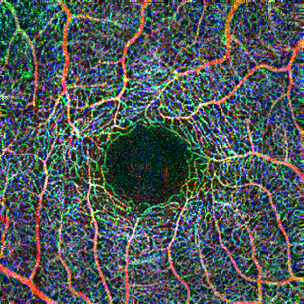
Sleep deprivation and epiretinal membrane risk: Machine learning findings from a nation-wide survey.
Kim et al.
Retina·Jan 22, 2026
Sleep deprivation (<6 hours on weekdays) was associated with a 1.25-fold increased risk of epiretinal membrane in a machine learning analysis of 15,240 Korean participants. The association was particularly strong among non-high-risk alcohol consumers and individuals with diabetes mellitus.
A Letter in Response To: "Artificial Intelligence-Enhanced Optical Coherence Tomography Analysis for Detecting Internal Limiting Membrane Removal in Epiretinal Membrane Surgery".
Bair
Retina·Jan 21, 2026
Abstract not available — see full article for details.
Predicting Postoperative Outcomes in Full-Thickness Macular Hole Repair Surgery: ChatGPT vs. Clinical Decision.
Wattad et al.
Retina·Jan 21, 2026
ChatGPT-5 showed high apparent accuracy in predicting full-thickness macular hole surgery outcomes but demonstrated significant optimism bias, overestimating closure rates and visual improvement compared to retinal specialists.
Letter to the Editor Concerning the Manuscript Entitled "The Effect of Steroids in the Treatment of Ocular Hypotony Associated with Proliferative Vitreoretinopathy".
Yan et al.
Retina·Jan 21, 2026
Abstract not available — see full article for details.
Bacillary Layer Detachment in Primary Rhegmatogenous Retinal Detachment: Occurrence, Predictors, and Surgical Outcomes.
Venkatesh et al.
Retina·Jan 20, 2026
Bacillary layer detachment (BALAD) occurs in 18.9% of fovea-off rhegmatogenous retinal detachments, particularly in younger patients with greater subretinal fluid height, but does not negatively impact anatomical reattachment rates or surgical success.
Tirzepatide and Reduced Risk of Diabetic Retinopathy and Related Complications: A Multicenter U.S. Cohort Study.
Shah et al.
Ophthalmology·Jan 21, 2026
This large retrospective cohort study found that tirzepatide use in diabetic patients was associated with significantly reduced risk of diabetic retinopathy progression and complications requiring intervention compared to lifestyle modification alone.
Reply to Comment on: Choroidal-Derived Intraretinal Neovascularization Compensates for Diabetic Retinopathy Ischemia via Dual-Pathway Remodeling Post-PRP.
He et al.
Am J Ophthalmol·Jan 20, 2026
Abstract not available — see full article for details.
Comparable Results of Subretinal Injection and Intravitreal Injection of Tissue Plasminogen Activator in the Treatment of Submacular Hemorrhage: A Meta-Analysis of Efficacy.
Zhang et al.
Retina·Jan 22, 2026
Meta-analysis of 353 eyes shows intravitreal and subretinal tissue plasminogen activator injections achieve comparable visual and anatomical outcomes for submacular hemorrhage treatment, with similar safety profiles.
Optical Coherence Tomography Risk Factors for Progression to Late-Stage Age-related Macular Degeneration in the Amish Eye Study.
Chung et al.
Ophthalmol Retina·Jan 21, 2026
In a 2-year prospective study of 276 eyes with early/intermediate AMD, incomplete retinal pigment epithelium and outer retinal atrophy (iRORA) and acquired vitelliform lesions (AVLs) were the strongest independent predictors of progression to late AMD, with odds ratios of 29.60 and 15.90 respectively.
OCT and OCT-A Findings in Giant Cell Arteritis: PAMM as a Specific Ischemic Marker.
Chapron et al.
Retina·Jan 22, 2026
Paracentral acute middle maculopathy (PAMM) demonstrated 100% specificity and positive predictive value for temporal artery biopsy positivity in suspected giant cell arteritis (GCA), making it a highly reliable non-invasive diagnostic marker.
Hyperreflective Choroidal Foci and Their Longitudinal Changes Following Treatment for Branched Retinal Vein Occlusion-Associated Macular Edema.
Kim et al.
Retina·Jan 21, 2026
Hyperreflective choroidal foci (HCF) in BRVO-associated macular edema decrease in the inner choroidal layers following treatment, with higher residual HCF counts predicting earlier recurrence and increased treatment burden.
Deep Learning-Based Prediction of Cardiopulmonary Disease in Retinal Images of Premature Infants.
Singh et al.
JAMA Ophthalmol·Jan 22, 2026
Deep learning analysis of retinal images from routine ROP screening can predict bronchopulmonary dysplasia and pulmonary hypertension in premature infants, with multimodal models achieving AUCs of 0.82 and 0.91 respectively.
Stage-Wise Characterization of Choroiditis Using the Blend Function in Ultra-Widefield Imaging.
Banerjee et al.
Retina·Jan 22, 2026
The blend function in ultra-widefield imaging provides superior stage-wise characterization of choroiditis compared to fundus autofluorescence, with the green channel offering better delineation of active inflammatory lesions and disease borders.
Comparison of pediatric patients with pars planitis who underwent treatment versus observation at a tertiary referral eye center.
Xia et al.
Retina·Jan 22, 2026
This retrospective study of 158 eyes with pediatric pars planitis found that mild cases can be safely observed without treatment, achieving similar visual outcomes to treated cases while avoiding medication-related complications.
Impact of Treatment on Inflammatory Choroidal Neovascularization in Patients with Sarcoidosis.
Schulgit et al.
Ocul Immunol Inflamm·Jan 22, 2026
Immunomodulatory therapy in sarcoidosis-associated choroidal neovascularization led to reduced need for intravitreal injections and trends toward improved visual acuity and anatomical outcomes.
Uveitis Characteristics and Risk of Developing Central Nervous System Inflammatory Disease: A Retrospective Cohort Study.
Maury et al.
Ocul Immunol Inflamm·Jan 22, 2026
In this retrospective cohort study of 175 uveitis patients, 13.7% developed CNS inflammatory lesions and specific uveitis characteristics including snowballs, intermediate/posterior location, and recurrence were associated with increased risk of symptomatic CNS disease.
Adalimumab-induced changes in NK cells phenotype, receptors and functions after clinical remission of Behçet's uveitis.
Esen et al.
Am J Ophthalmol·Jan 19, 2026
Adalimumab treatment in Behçet's uveitis patients shifts NK cells toward an exhausted-like phenotype while rebalancing activating/inhibitory receptors, suggesting NK-receptor balance as a potential pharmacodynamic biomarker for treatment response.
Silicone Punctal Plugs as a Significant Risk Factor for Iatrogenic Endophthalmitis: A Case Report.
Quin-Sánchez et al.
Ocul Immunol Inflamm·Jan 18, 2026
A case report documents the first reported instance of endophthalmitis following intravitreal anti-VEGF injection linked to bacterial colonization of silicone punctal plugs, with Streptococcus oralis cultured from both the intraocular specimens and the explanted plugs.